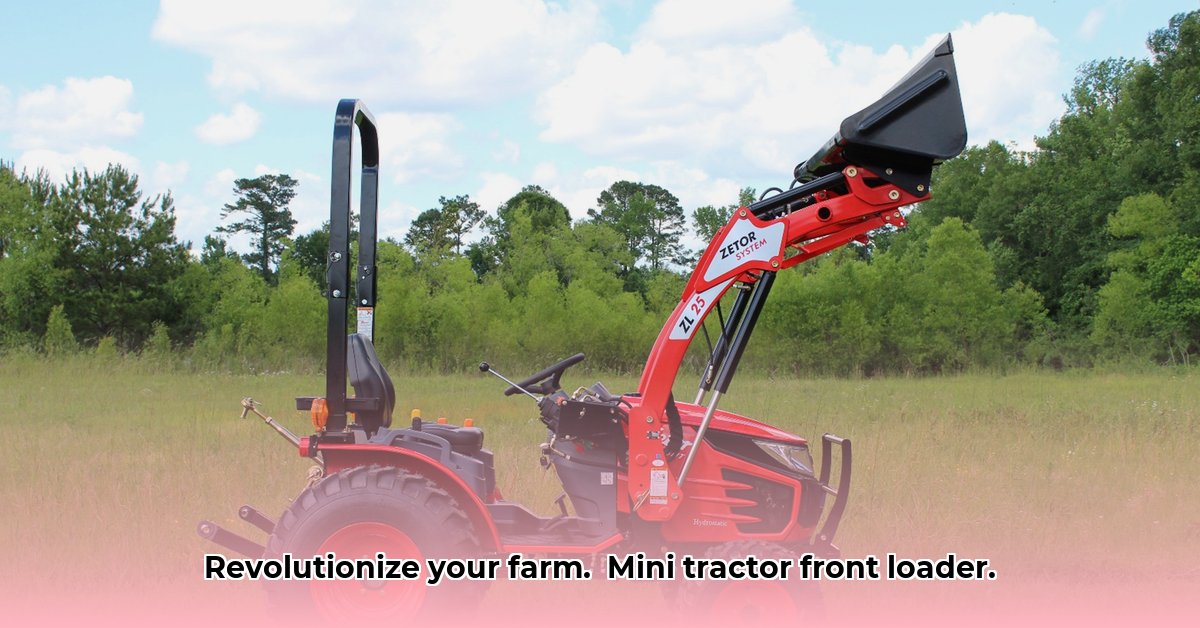
Mini tractor front loaders are transforming farming, offering increased efficiency and reduced labor costs. These compact machines provide impressive lifting capacities and horsepower, enabling faster task completion and potential fuel savings. Their adaptability, through interchangeable attachments, makes them versatile tools for various farming operations. But is investing in a mini tractor front loader the right decision for your farm? This guide provides the information you need to make an informed choice. For more information on additional tractor attachments, check out this resource.
Understanding the Power and Versatility of a Mini Tractor Front Loader
Modern mini tractor front loaders are significantly more powerful and versatile than their predecessors. They boast impressive lifting capacities and horsepower, leading to quicker job completion and potential fuel cost savings. This increased efficiency translates directly to a higher output for your farm.
However, their true value lies in their adaptability. A simple attachment change can transform the machine from moving topsoil with a bucket to mowing pastures with a mower deck, or even handling pallets with a pallet fork. This eliminates the need for multiple specialized machines, saving space and money. This streamlined approach is key to modern, sustainable farming practices. Want to learn more about optimizing your farm's efficiency and sustainability? Explore various government and NGO-sponsored programs designed to assist farmers in adopting eco-friendly methods.
Advanced Features for Enhanced Productivity and Ease of Use
Leading manufacturers, such as John Deere, offer sophisticated models with self-leveling loaders. These features simplify loading and unloading, increasing both efficiency and safety. The improved handling of larger loads translates to both time and energy savings. Features like electro-hydraulic hitches offer enhanced precision, further reducing physical strain on the operator. This contributes to less worker fatigue and improved overall productivity.
Making the Economic Case: Is a Mini Tractor Front Loader the Right Investment?
While the initial investment in a mini tractor front loader can be significant, the long-term returns often outweigh the upfront costs. Consider these factors: reduced labor expenses (potentially requiring fewer employees), increased output leading to higher profits, and the potential for long-term fuel savings through efficient operation. A detailed cost-benefit analysis, tailored to your farm's specific circumstances, is crucial for determining the financial viability of this investment. Will the improved efficiency and productivity justify the initial expense?
Determining Your Needs: The Right Fit for Your Farm
Before purchasing, carefully assess your farm's specific needs:
- Farm Size: Larger farms may require more powerful models than smaller operations.
- Crop Types: The optimal attachments will depend on the specific types of crops you cultivate.
- Budget: Explore financing options, including leasing, and compare prices and terms from different vendors.
- Long-Term Sustainability: Consider fuel efficiency, durability, and the machine's expected lifespan.
This careful evaluation will help ensure you select a mini tractor front loader that aligns perfectly with your farm's operational and financial capabilities.
Environmental Considerations: A Responsible Approach to Farming
While mini tractor front loaders can increase efficiency and potentially reduce fuel consumption per task, their overall environmental impact requires careful consideration. This includes the manufacturing process, the materials used, and eventual disposal. Some manufacturers are actively working to reduce their carbon footprint through sustainable manufacturing practices. Investigating their environmental initiatives is crucial for making a responsible purchasing decision. Isn't minimizing your farm's environmental footprint a top priority in today's world?
The Future of Mini Tractor Front Loaders: A Glimpse Ahead
Continuing technological advancements promise even greater fuel efficiency, the use of more sustainable materials, and further integration of precision farming technologies. These improvements will further enhance the environmental friendliness and economic viability of mini tractor front loaders, offering a brighter and more sustainable future for agriculture.
Actionable Steps for Smart Farm Upgrades
The following table outlines actionable steps for different stakeholders:
| Stakeholder | Short-Term Actions | Long-Term Actions |
|---|---|---|
| Small-scale farmers | Explore leasing options and government subsidies; focus on high-return crops. | Advocate for better financing access; commit to ongoing technology adoption and training. |
| Large-scale farms | Conduct a thorough ROI analysis; optimize implement selection for maximum efficiency. | Integrate precision agriculture; invest in robust waste management infrastructure. |
| Equipment Manufacturers | Gather and publicly share precise data on sustainability and operational costs. | Develop and implement sustainable manufacturing processes; offer diverse financing options. |
| Governments/NGOs | Provide targeted financial incentives and comprehensive technology training programs. | Develop supportive regulations; fund research in sustainable and efficient farm technologies. |
Investing in a mini tractor front loader is a strategic investment in your farm's future. It's about optimizing operations, embracing sustainable practices, and ultimately boosting profitability. By carefully researching and making informed decisions, you can effectively enhance your farm's efficiency and long-term success.
How to Calculate the Total Lifecycle Cost of a Mini Tractor Front Loader
Understanding the total lifecycle cost (TLC) is critical for sustainable farm management. It encompasses all costs from purchase to disposal. Accurate TLC calculation aids in informed decision-making and ensures long-term financial viability. Factors such as maintenance, fuel, repairs, and downtime significantly influence the TLC.
Deconstructing the Cost of Ownership: Beyond the Sticker Price
The initial purchase price is only the starting point. Consider depreciation, financing costs, taxes, insurance, maintenance and repairs, fuel costs, labor, and downtime. These contribute substantially to the overall cost.
Breaking Down the Lifecycle Cost Equation: A Step-by-Step Guide
- Gather Data: Compile all relevant costs: purchase price, financing, insurance, taxes, maintenance, fuel consumption, labor, and downtime estimates.
- Estimate Lifespan: Determine the expected useful life of the tractor, consulting manufacturer estimates.
- Calculate Annual Costs: Sum annual expenses (maintenance, fuel, taxes, insurance).
- Calculate Total Ownership Costs: Add annual costs across the lifespan.
- Add Depreciation: Incorporate your depreciation calculation.
- Consider External Factors: Account for potential fuel price fluctuations, regulatory changes, and technology advancements.
Minimizing Lifecycle Costs: Proactive Strategies
Regular maintenance is crucial for minimizing long-term costs. Employ fuel-efficient operating techniques. Consider using telematics systems to monitor performance and predict potential issues. This proactive approach can significantly reduce downtime and extend the lifespan of your equipment.